Septic tank cleaning is a specialized maintenance process that involves removing the accumulated sludge and scum from a septic system to prevent failure, odors, and environmental contamination. Because these systems rely on a delicate balance of bacterial action, the process must be handled carefully.
Here is a breakdown of how the work is typically performed:
Locating and Accessing the Tank
The first step is finding the septic tank, which is often buried underground.
Probing: Technicians use a soil probe to locate the edges of the tank and the access lids.
Uncovering: The soil over the manhole covers (risers) is excavated. Most modern systems have two compartments, both of which need to be accessed for a thorough clean.
Inspection and Measurement
Before pumping, the technician checks the liquid levels.
Scum and Sludge Levels: They measure the thickness of the top “scum” layer (fats and oils) and the bottom “sludge” layer (solid waste). If these layers occupy more than 25% to 33% of the tank’s total capacity, the tank is overdue for service.
Backflow Check: They check the outlet pipe to ensure water isn’t flowing back from the drain field, which could indicate a system failure.
The Pumping Process
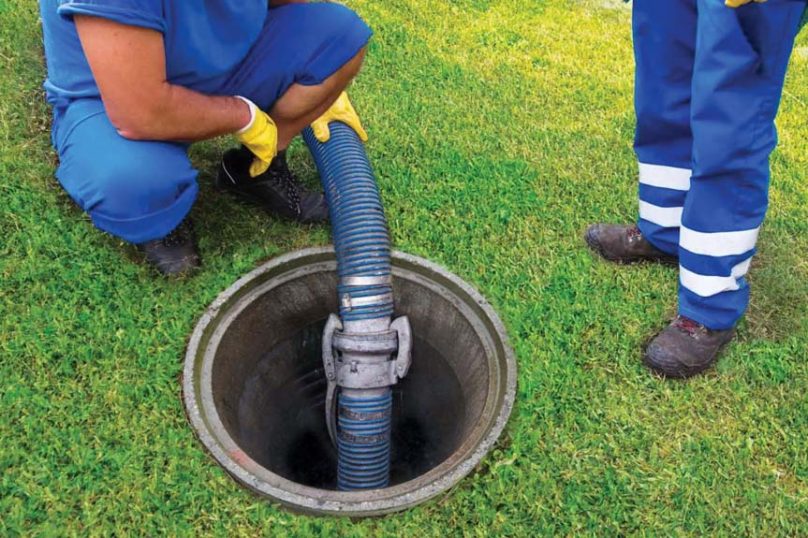
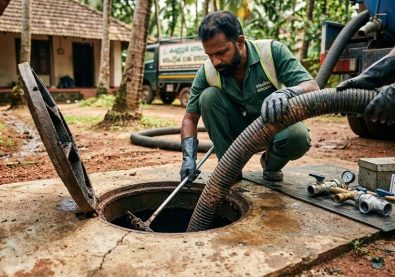
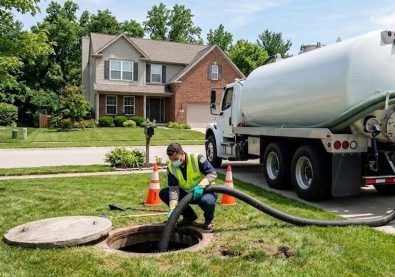
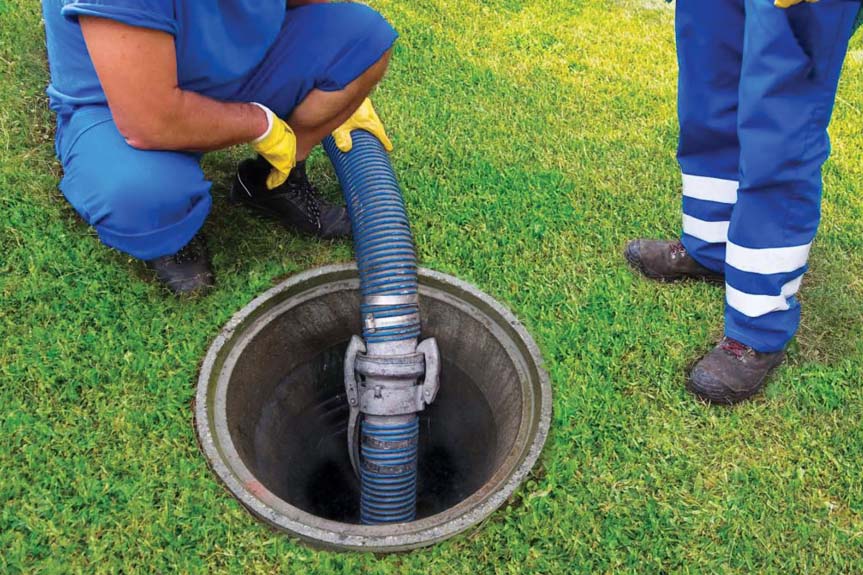
The actual cleaning is performed using a vacuum truck equipped with a large-diameter suction hose.
Agitation (Back-Flushing): Often, the sludge at the bottom is too thick to be sucked out directly. The technician will use a “muck rake” or a high-pressure water jet to break up the solids. They may also pump some liquid back into the tank to create a slurry that is easier to remove.
Complete Extraction: The goal is to remove all liquids and solids. A “partial pump-out” is generally ineffective as it leaves behind the heavy sludge that eventually clogs the system.
Cleaning and Final Inspection
Once the tank is empty, the technician performs a visual inspection of the interior:
The Baffles: These are T-shaped pipes at the inlet and outlet. They ensure that solids stay in the tank and don’t escape to the drain field. If these are damaged or missing, they must be replaced.
Structural Integrity: The walls and floor are checked for cracks or signs of corrosion, especially in older concrete tanks.
Filter Cleaning: If the tank has an effluent filter, it is pulled out and sprayed clean before being reinstalled.
Closing and Restoration
Resealing: The lids are placed back on the tank. If the lids are damaged, they are replaced to prevent accidents or gas leaks.
Backfilling: The soil is replaced and leveled over the access points.
Documentation: A professional service will provide a report noting the condition of the tank, the amount of waste removed, and a recommended schedule for the next cleaning (typically every 3 to 5 years for an average household).
Key Environmental Safety
The waste collected, known as septage, is highly concentrated. It must be transported and disposed of at a licensed wastewater treatment plant or a designated land-application site where it can be safely processed according to local environmental regulations.