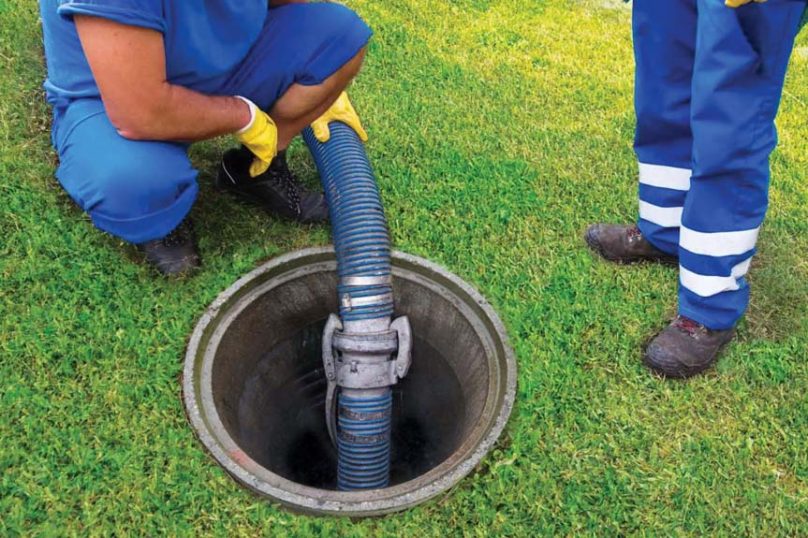
Pipe block repairing is the process of restoring flow to a pipeline that has been obstructed by physical debris, mineral buildup, or structural failure. While “cleaning” removes the blockage, “repairing” often involves fixing the underlying pipe damage that caused the block in the first place.
Professional repair work follows a specific technical sequence:
Advanced Localization
Before any repair, the exact “fault point” must be mapped to avoid unnecessary excavation or wall damage.
Sonde Tracking: A transmitter is sent down the pipe on a cable. A technician above ground uses a handheld receiver to trace the signal, marking the exact depth and coordinates of the blockage.
Acoustic Leak Detection: If the blockage has caused a high-pressure burst, sensitive microphones are used to listen for the “hiss” of escaping water or air.
Blockage Removal (The Clearance Phase)
The pipe must be cleared before it can be repaired.
Electromechanical Milling: For stubborn blocks like concrete, heavy scale, or thick tree roots, a high-torque milling machine is used. It features diamond-tipped or carbide cutters that grind the obstruction into fine particles.
Kinetic Water Ram: For blocks near fixtures, a device that releases a controlled burst of compressed air creates a shockwave through the standing water, dislodging the blockage without damaging old pipes.
Trenchless Repair (No-Dig Technology)
Modern pipe repair often avoids digging up floors or yards through “trenchless” methods:
CIPP (Cured-In-Place Pipe) Lining: A flexible tube coated with epoxy resin is pulled or “blown” into the damaged pipe. Once in place, it is inflated and cured (hardened) using steam, hot water, or UV light. This creates a “pipe within a pipe” that is seamless and root-proof.
Pipe Patching: If only a small section of the pipe is blocked/damaged, a shorter “point repair” sleeve is inserted. A packer is inflated to press the resin-soaked patch against the pipe wall until it bonds.
Traditional Sectional Replacement
When a pipe has “bellied” (sagged) or completely collapsed, trenchless methods may not work.
Excavation: The area is safely dug out, ensuring any surrounding utility lines (gas, electric) are protected.
Cutting and Couplings: The damaged section is cut out using specialized pipe cutters. A new section of pipe (typically PVC or HDPE) is installed using mechanical couplings or solvent welding to ensure a watertight seal.
System Testing and Backfilling
Once the repair is completed:
Pressure Testing: The line is capped and pressurized with air or water to ensure there are zero leaks at the new joints.
Final CCTV Pass: A camera is sent through one last time to confirm the interior is smooth and the flow path is clear.
Surface Restoration: The area is backfilled and the surface (whether it’s soil, concrete, or tile) is restored to its original condition.
Critical Considerations
Joint Integrity: In many cases, blockages occur at the joints where pipes meet. Modern repairs prioritize using flexible couplings that allow for slight ground movement without cracking.
Ventilation: Blocked pipes often trap pockets of sewer gas. Professionals ensure the system is properly vented during the repair to prevent the risk of fire or inhalation.